
FIELD STATION· 54.9°N 2.1°W
fieldstation.xyz
A talk by FIELD STATION
Environmental Justice: Why do people default to Big AI?
Dr Doug Belshaw
Press H to see the keyboard shortcuts, S for the speaker notes

Dr Doug Belshaw
Press H to see the keyboard shortcuts, S for the speaker notes
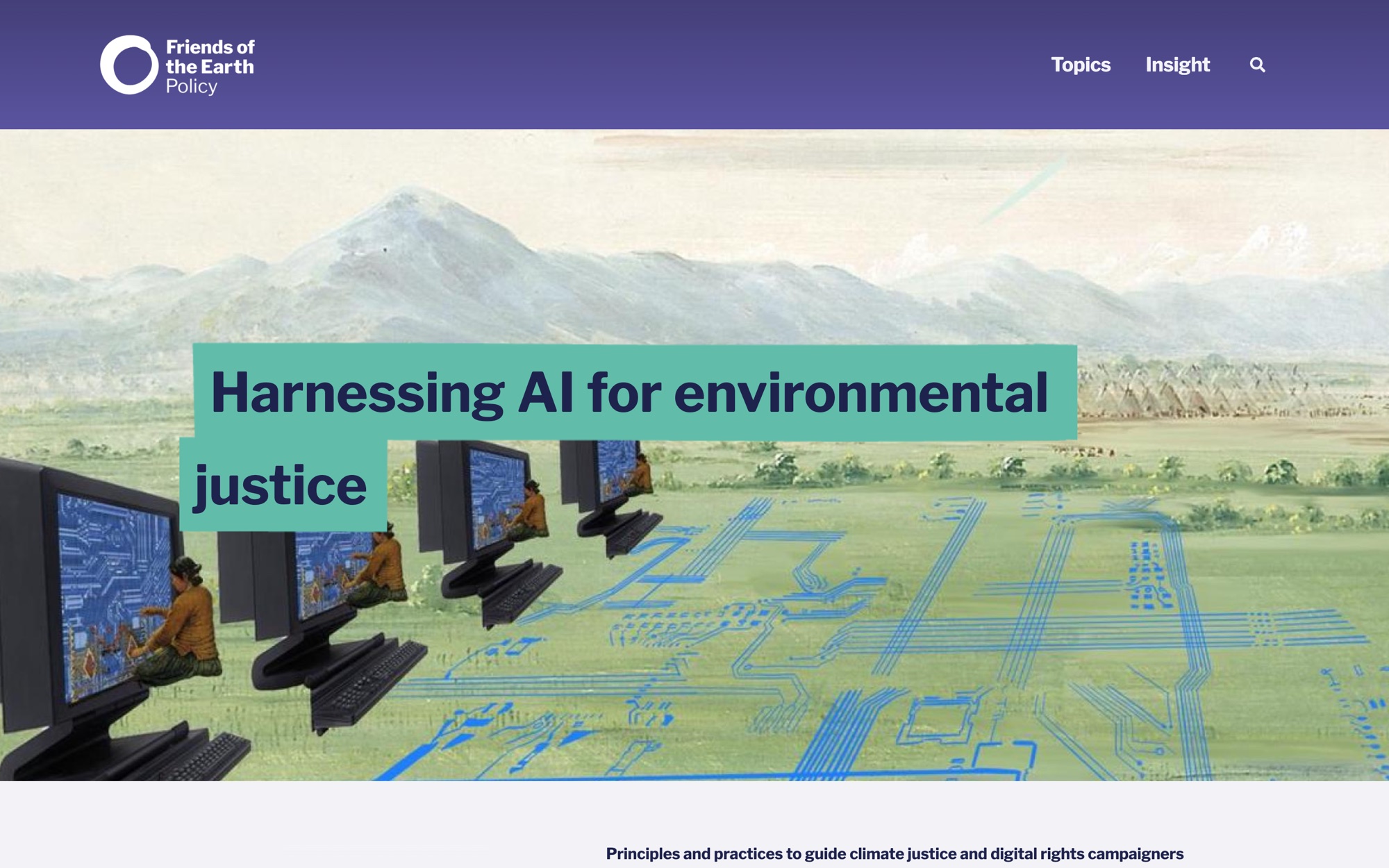
Principles and practices to guide climate justice and digital rights campaigners in the responsible use of AI.
Written by
Laura Hilliger and Dr Doug Belshaw
We Are Open Cooperative
In collaboration with Mary Stevens, Friends of the Earth (England, Wales and Northern Ireland)
policy.friendsoftheearth.uk/reports/harnessing-ai-environmental-justice
Screenshot, 13 Nov 2026•Cover art: Hanna Barakat + AIxDESIGN & Archival Images of AI / Better Images of AI / Weaving Wires 2 / CC-BY 4.0

Curiosity around AI creates opportunities for better choices.
Transparency around usage, data and algorithms builds trust.
Holding tech companies and governments accountable leads to responsible action.
Including diverse voices strengthens decision making around AI.
Sustainability in AI systems helps reduce environmental impact and protect natural ecosystems.
Community collaboration in AI is key to planetary resilience.
Advocating with an intersectional approach supports humane AI.
From Part 3 of the report•Image: © Nadia Piet + AIxDESIGN & Archival Images of AI / Better Images of AI / Cloud Computing / CC-BY 4.0. Cropped
Where could we intervene in this system?
Delays
When could the pushback arrive sooner?
Loops
Where could a loop be weakened, or strengthened?
Information
What do people need to be able to see?
Rules
Who sets the rules, and who could change them?
Self-organisation
How could alternatives grow by themselves?
Goals
Why are we using AI for this at all?
Dr Doug Belshaw
contact@fieldstation.xyz
fieldstation.xyz
GreenPT•carbon-aware timing
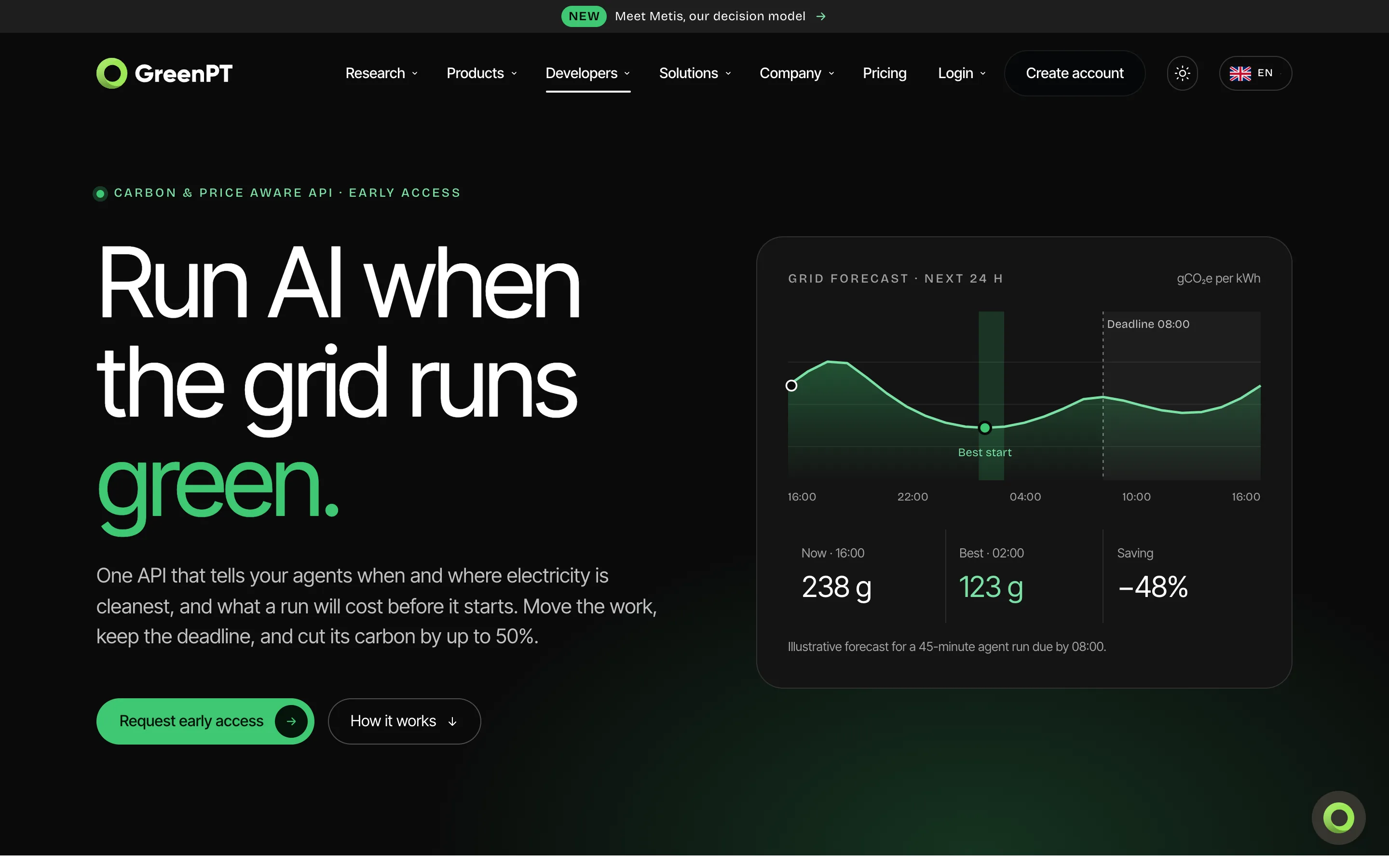
Give it a deadline and it picks a cleaner time to run.
A 45-minute job due by 08:00 has about half the carbon if it starts at 02:00.
GreenPT’s own illustration. Early access.
Which of your tasks could wait?
greenpt.com/carbon-aware-api•CO2e: all greenhouse gases, counted as CO2
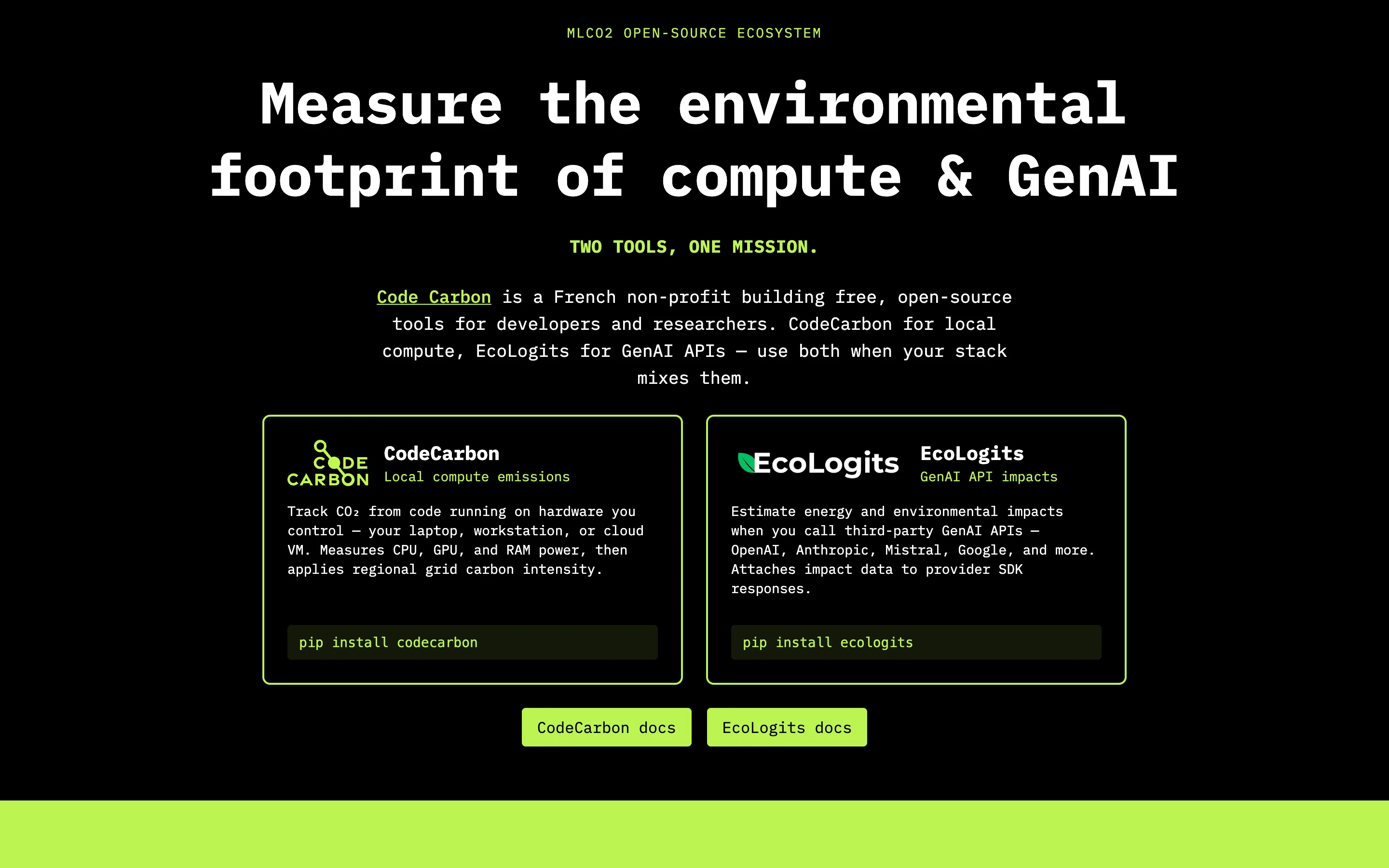
Computers you run
CodeCarbon measures the power, then applies your grid’s carbon.
AI services you call
EcoLogits estimates each request. Its calculator is behind the figures on backup B.
Free, open source•mostly for developers
codecarbon.io
A free AI assistant from AI Potluck, an initiative by Current AI, a non-profit.
People bring the open models, datasets and tools. Its X-ray shows what happened behind each answer.
alpha.aipotluck.org
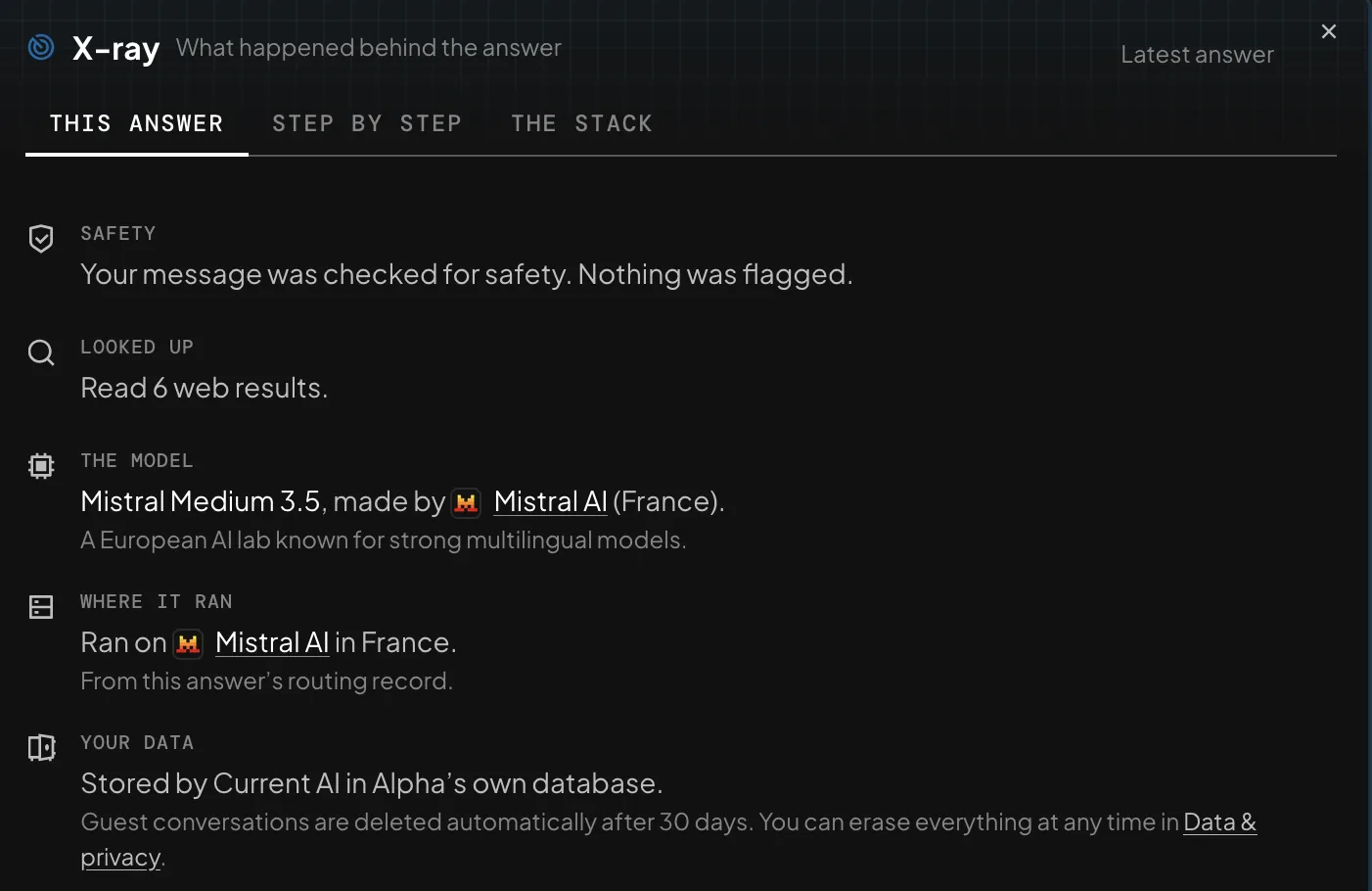
Alpha’s X-ray panel for one answer, 5 Nov 2026•AI Potluck, an initiative by Current AI•aipotluck.org